

From lead handling to member support, exercise referral to HR, operators are increasingly exploring how automation can improve performance and drive efficiency, not to replace people, but to allow people to step away from the repetitive tasks and explore new areas.
Whilst the growth of AI tech is exciting, and of course we are pleased to see it, with that comes challenges, specifically where we have become aware of an emerging pattern around solutions that impress in demonstration environments, but often struggle to deliver meaningful and measurable impact once deployed. The issue is not the underlying technology, but the gap between capability and operational reality.
AI can often be tested around “What are your opening hours”, when the reality is that a real life question could be “Can I freeze my membership because of surgery and will I still be charged?”.that is a much more complex question! This shifts the focus from basic database knowledge to business logic + policy + empathy + integration.
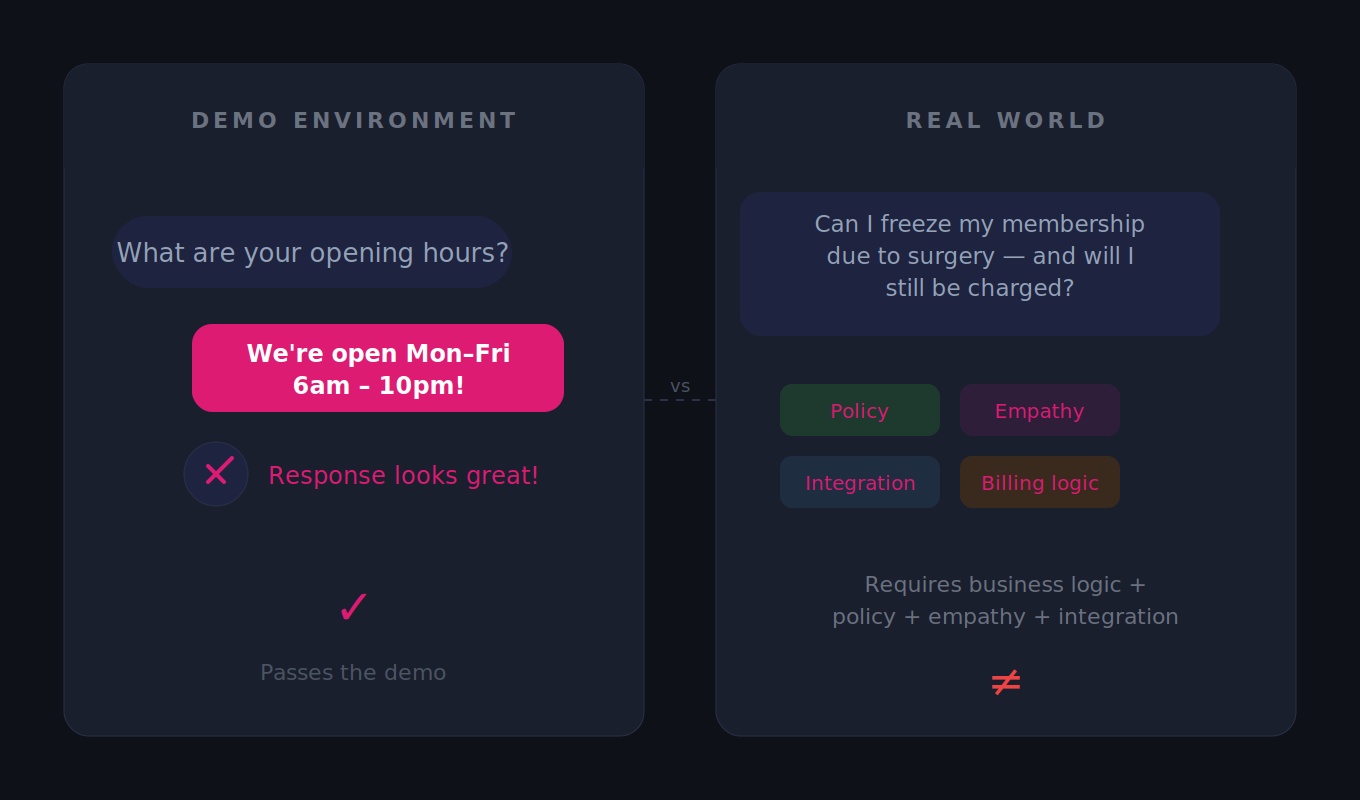
The issue here is that some AI systems, whilst looking great in a training environment, don’t deliver in the real world due to surface level conversations, poor integrations, missing workflows to escalate or pass on conversations that require more support or lacking deeply trained knowledge of your business processes.
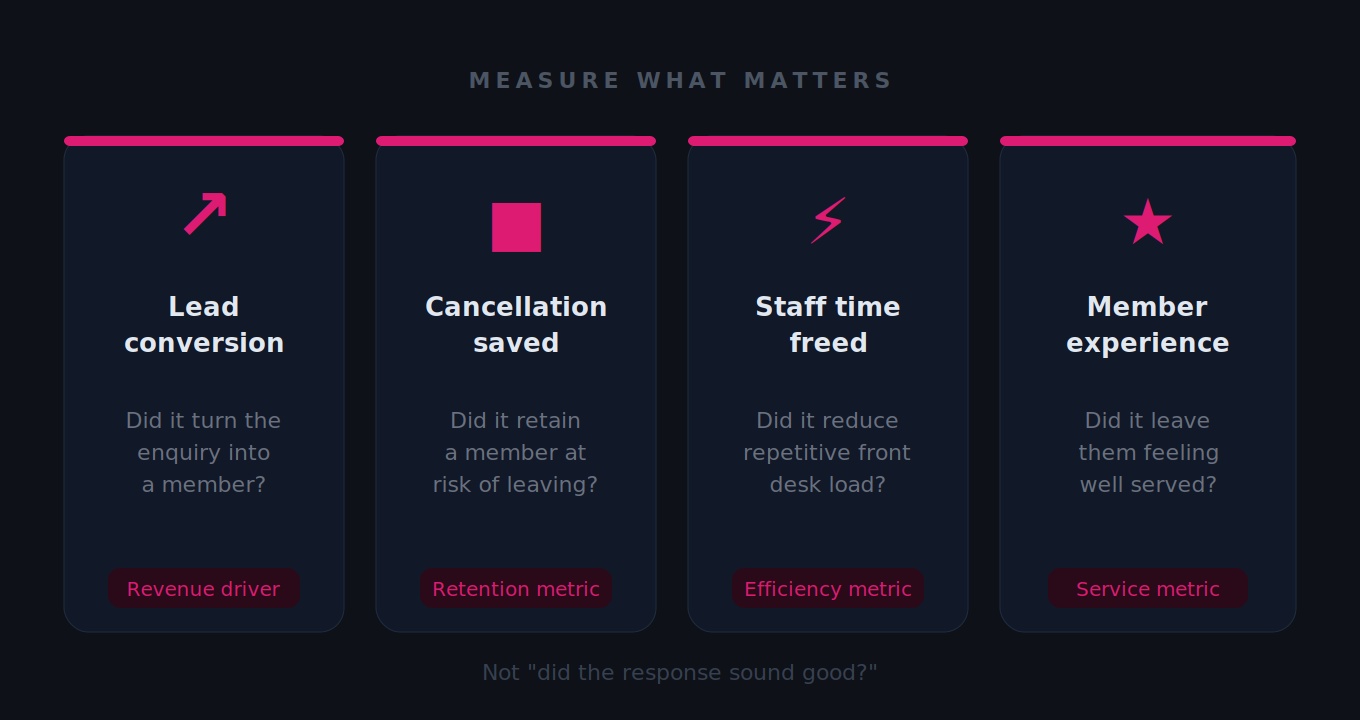
Whilst some AI solutions are measured by “that response sounds good”, the real metric for evaluation should be:
- Did it convert the lead or deliver the desired customer outcome?
- Did it save the cancellation?
- Did it reduce front desk load?
- Did it leave the customer feeling that they had a great experience?
For these great outcomes to happen time after time, AI employees, as the name suggests, need to be treated like employees. Systems that claim to have a simple set up, and then “it’ll run on its own” will never deliver the best outcome. AI employees require a proper induction, ongoing training, performance tracking and clear ownership. Much like any employee, you need to give them the knowledge and support to do their job.
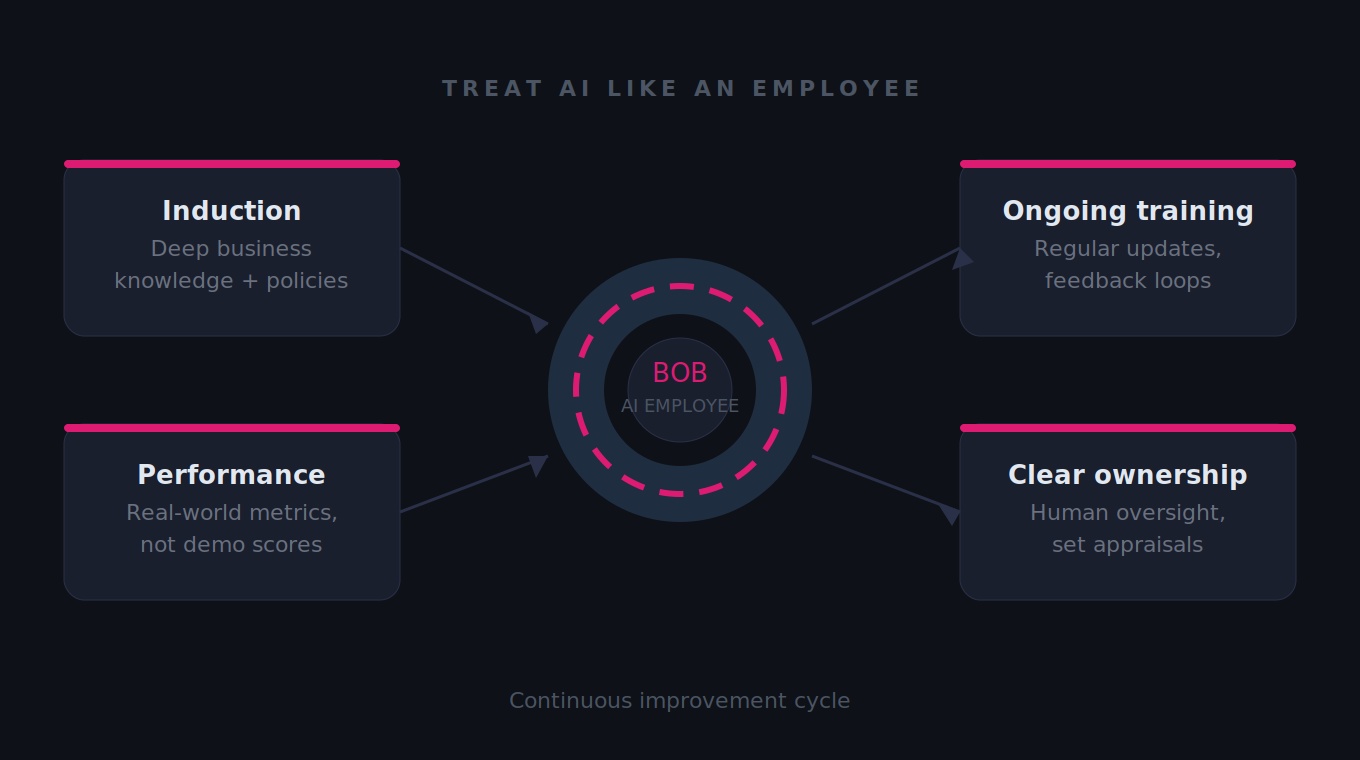
Following this thought process, it takes AI from something ‘cool to have’ to a real solution delivering high quality, consistent and personalised service levels that improve commercial performance and efficiency. The process looks like this:
- Build a firm foundation of knowledge and training so that conversations aren’t surface level.
- Start with measurable outcomes in mind around commercial performance, service levels, response times and workload efficiencies.
- Don’t judge impact by training environments, judge them by real world conversations.
- Build a system of continuous improvement. Much like any employee, plan regular training, evaluate performance, set appraisal time and feedback if you spot something that doesn’t meet your standards or exceeds them.
For operators, the implication is clear. AI should not be viewed as a feature to deploy, but as a system to manage. It requires integration, monitoring, and continuous refinement, much like any other critical part of the business.
The organisations that recognise this shift will move beyond experimentation and embed AI into their operational infrastructure. In doing so they will unlock its true commercial potential.
.png)